Installation in external areas, outdoors, in damp and wet areas and rooms
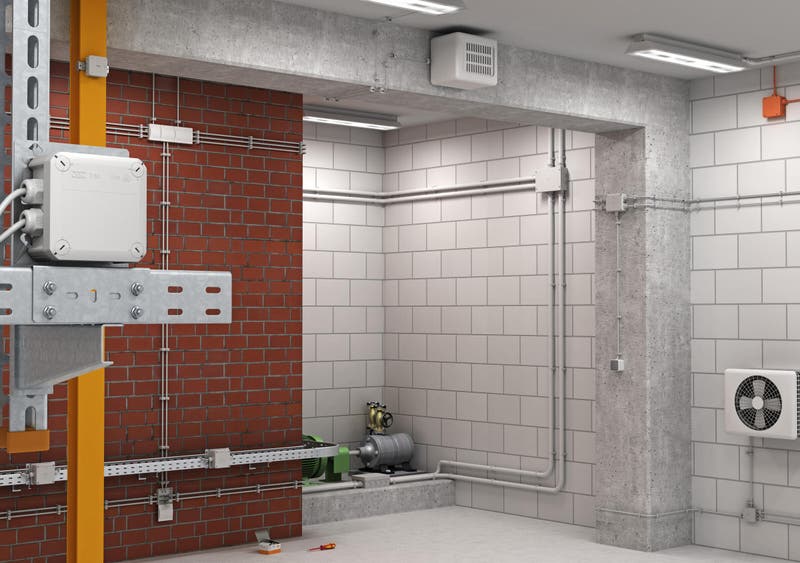
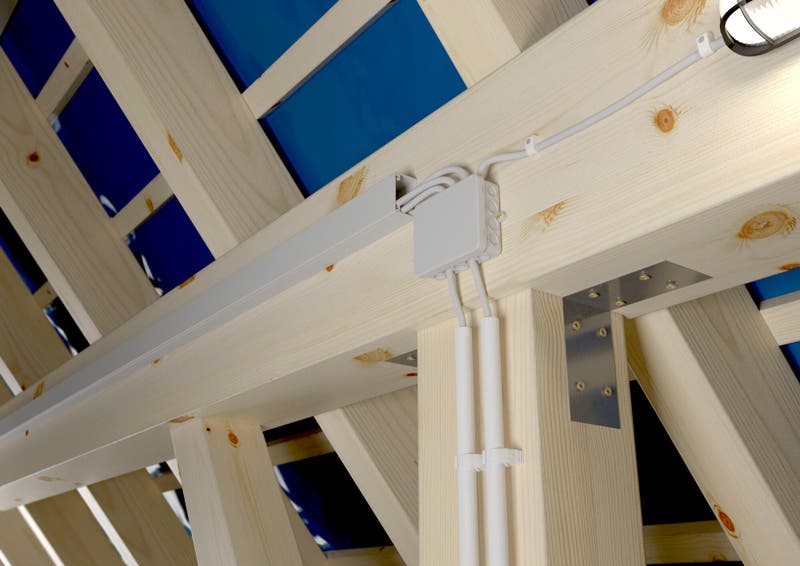
Junction boxes are used to connect cables and can be mounted in all kinds of areas. With regard to the ambient conditions, several factors and standardised specifications must be taken into account, in order to select the right junction box for the intended place of use. Thus, with installations in outdoor areas or in damp or wet environments, it is necessary to estimate exactly how strong the load from weathering or possibly damaging environmental influences is and which protective measures are necessary. The division into different protection ratings, also known as IP
codes, provides information on how strongly a junction box is protected against contact and the harmful ingress of water. By contrast, the so-called IK code represents the protection rating against mechanical loads. DIN VDE 0100 is an erection requirement and specifies which requirements a junction box must fulfil in specific installation areas. To guarantee a safe device installation, all these factors must be checked in individual cases and observed during the selection.
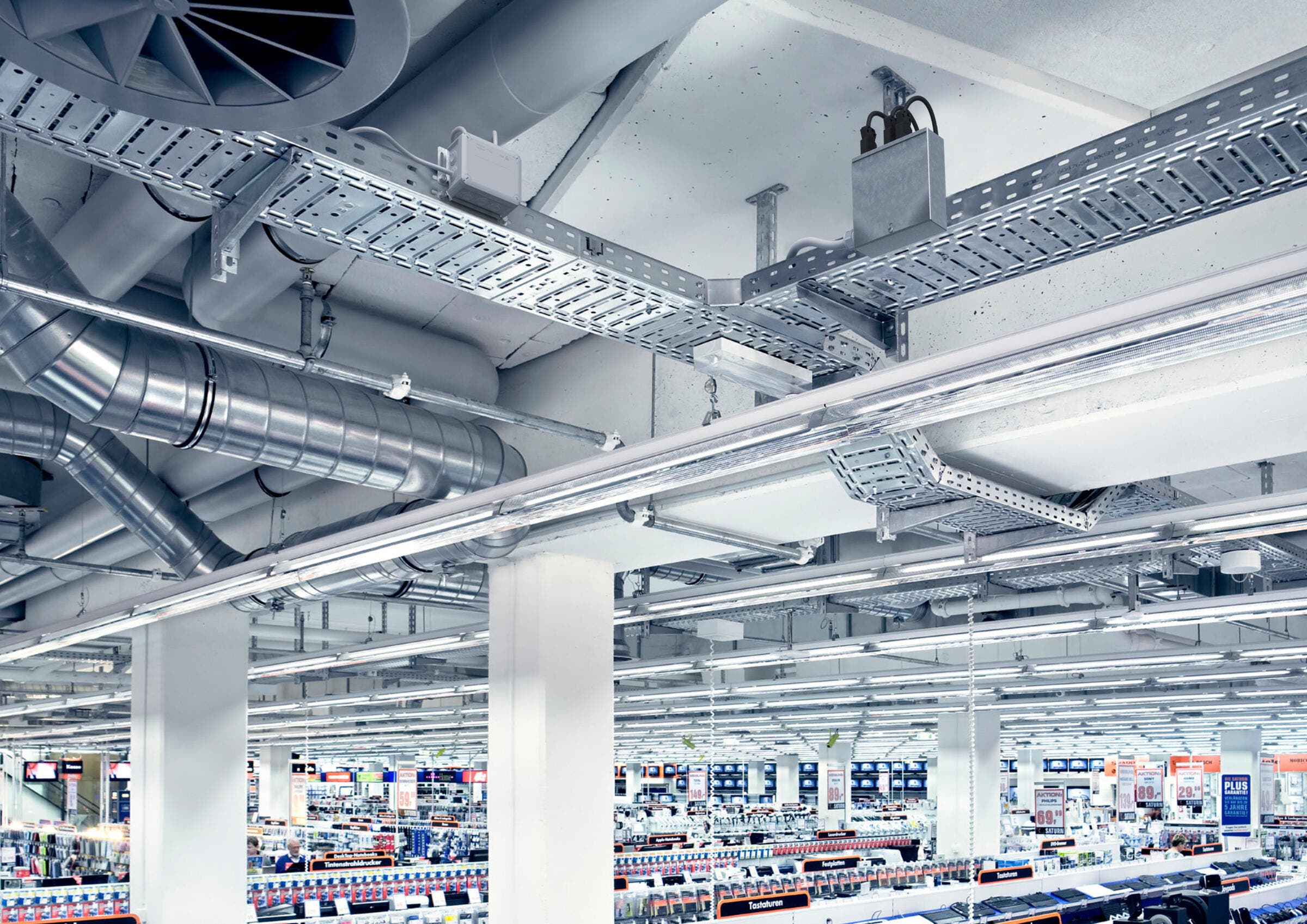
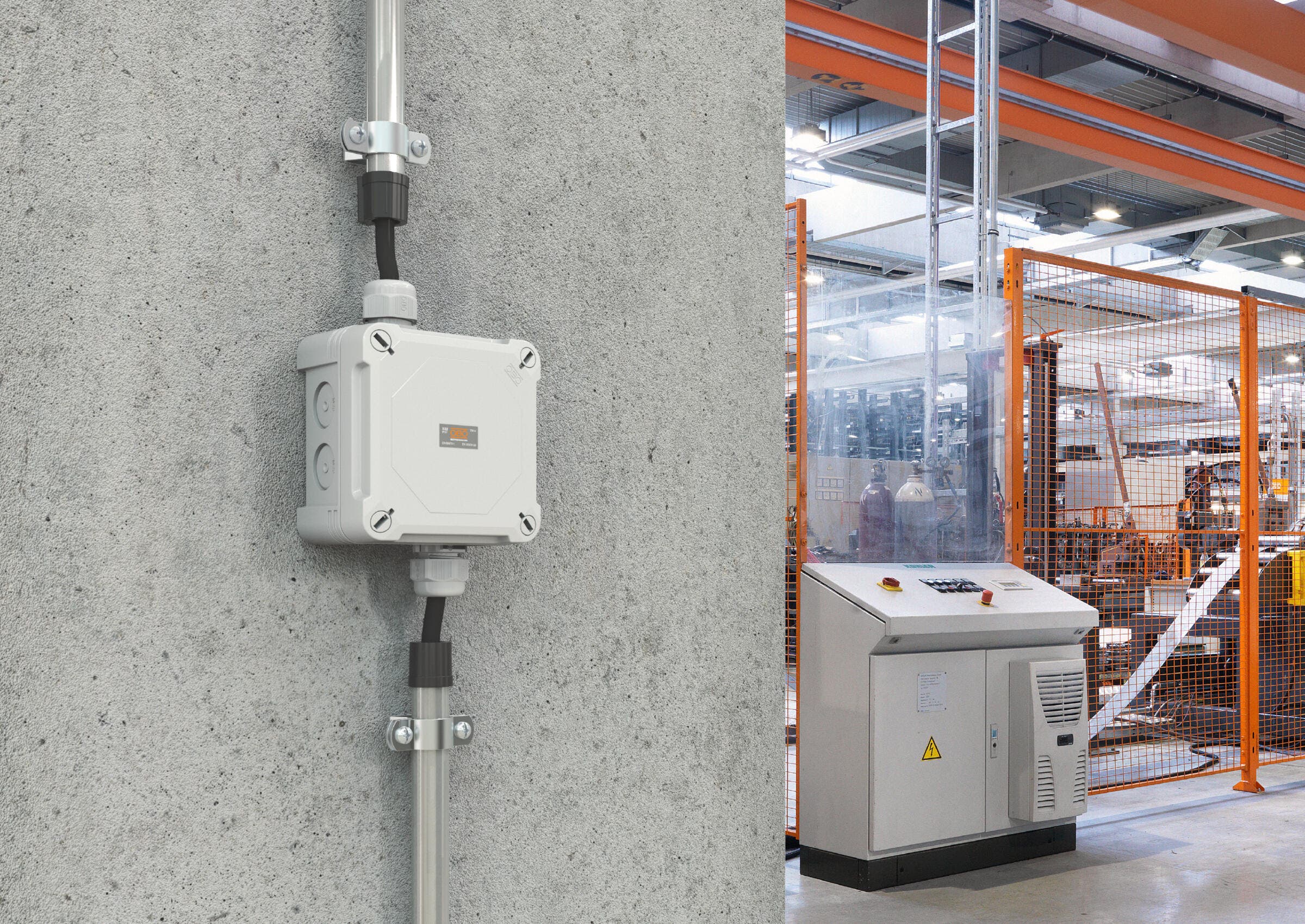
Basic principles
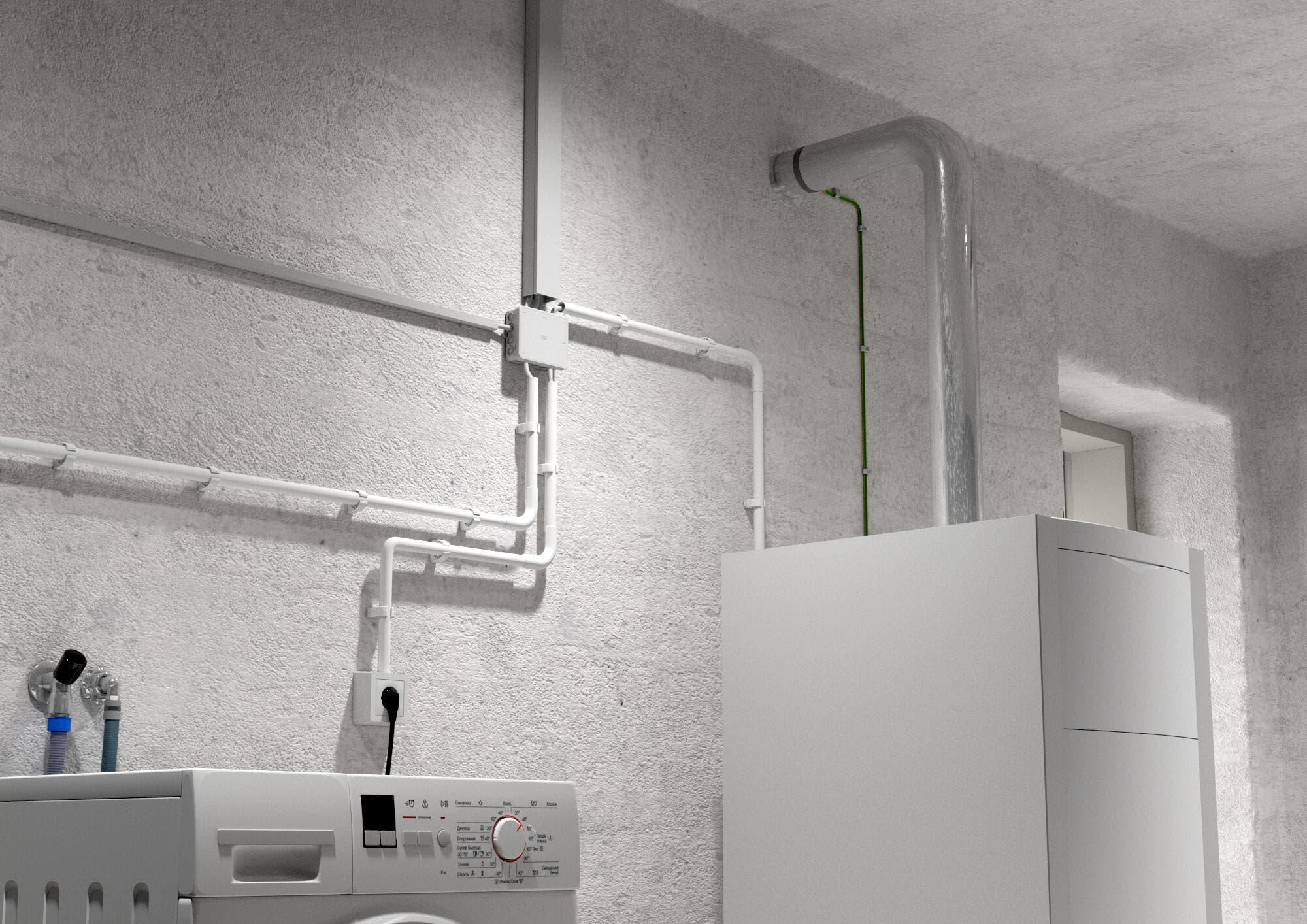
With all installation types, the user must always comply with the valid conditions, such as the erection requirements according to DIN VDE 0100-ff.
Depending on the local circumstances, the user may need to take additional or special measures as protection, to guarantee the safe function of junction boxes.
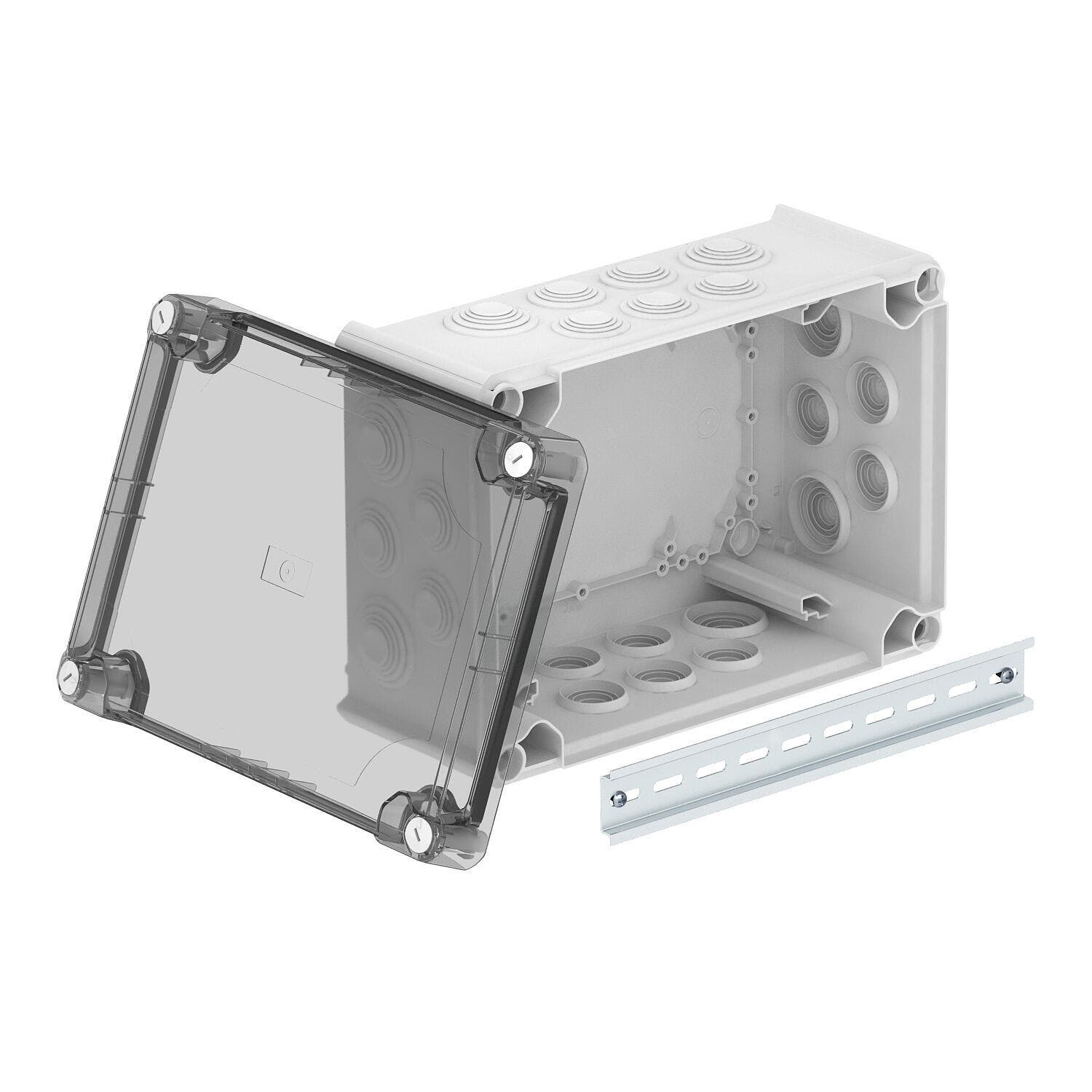
Influencing factors for outdoor installations
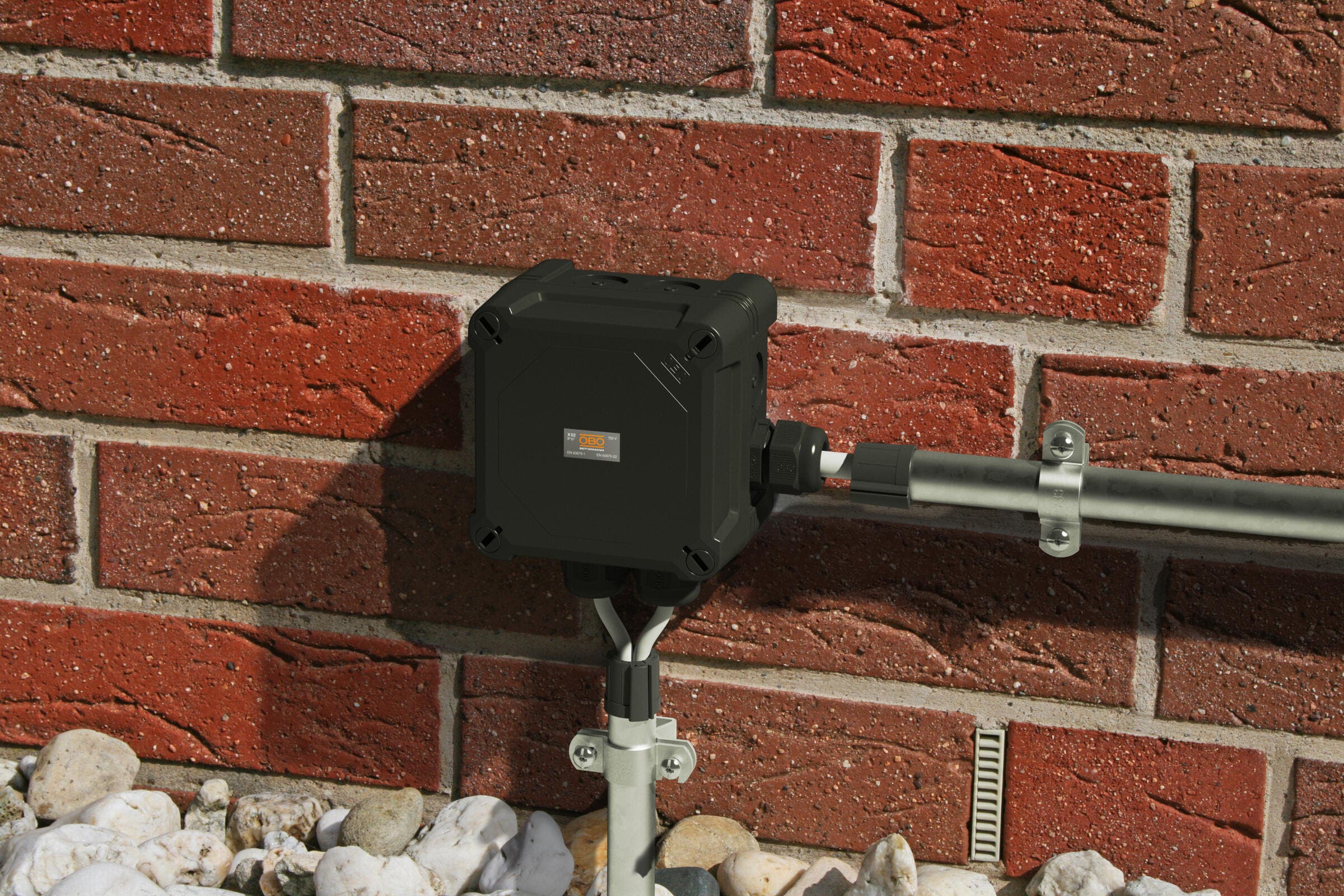
Our junction boxes can be installed in a wide range of environments, including outdoors. But there are a number of influencing factors to consider: UV rays, rain, snow, sun and even chemical influences. In our FAQs, we reveal how to make sure everything goes just right when installing OBO junction boxes outdoors.
IP protection rating
The IP protection rating specifies how far a component is protected against contact and foreign bodies and the ingress of water. The IP protection ratings are controlled by the standard DIN EN 60529 (VDE 0470 Part 1). The IP is always made up of two digits

The first digit designates the contact and foreign body protection. On the one hand, it specifies how far a housing prevents access to dangerous parts, by preventing or limiting the ingress of body parts or objects held by a person. On the other hand, it specifies how far the housing protects the installed resources against the ingress of solid foreign bodies
The second digit specifies the protection against water. It specifies how far the resource is protected against incoming water and the resulting damage.
Protection rating against contact and the ingress of foreign bodies
| First code digit | ...against access to the hazardous parts | ...against solid foreign bodies |
| 0 | Protected against access to hazardous parts with the back of the hand | Non-protected |
| 1 | Protected against access to hazardous parts with a finger | Protected against solid foreign bodies of 50 mm diameter and larger |
| 2 | Protected against access to hazardous parts with a tool | Protected against solid foreign bodies of 12.5 mm diameter and larger |
| 3 | Protected against access to hazardous parts with a wire | Protected against solid foreign bodies of 2.5 mm diameter and larger |
| 4 | Protected against access to hazardous parts with a wire | Protected against solid foreign bodies of 1.0 mm diameter and larger |
| 5 | Protected against access to hazardous parts with the back of the hand | Dust-protected |
| 6 | Protected against access to hazardous parts with a wire | Dust-proof |
Protection rating against the entry of water with a damaging impact
| Second code digit | Short name | Definition |
| 0 | Non-protected | - |
| 1 | Protected against water droplets | Droplets falling vertically may have no damaging impact. |
| 2 | Protected against drip water when enclosure tilted up to 15° | Vertically falling drops must not have harmful effects when the enclosure is tilted at any angle up to 15° on either side of the vertical |
| 3 | Protected against spray water | Water being sprayed at an angle of 60° on both sides of the vertical must not have any damaging impact. |
| 4 | Protected against spray water | Water spraying the housing from any direction must not have any damaging impact. |
| 5 | Protected against water jets | Jets of water pointing at the housing from any direction must not have any damaging impact. |
| 6 | Protected against strong water jets | Strong jets of water pointing at the housing from any direction must not have any damaging impact. |
| 7 | Protected against the effects of being temporarily immersed in water | If the housing is sometimes underwater, under standard pressure and time conditions, then water may not enter in such volumes as would have a damaging impact |
| 8 | Protected against the effects of being continuously immersed in water | Ingress of water in quantities causing harmful effects must not be possible when the housing is continuously immersed in water under conditions which shall be agreed between manufacturer and user. However, the conditions are more difficult to fulfil than for number 7 |